Aug 272007
 

This is my first post in english – hopefully there will be more in the future.

Whether we are talking about a telekinetic splatterfest in a shopping mall food court, a vagina-like slit opening up in your stomach and swallowing your gun and your video-tapes, or just a dose of some good old car crash-sex, Canadian director David Cronenberg is responsible for some of the most brain-bending moments in cinema. Many of his movies concentrate on a fear of bodily transformation and infection, and therefore it is reasonable to talk about him as a maker of Body Horror-movies.

The theme of graphic descriptions of diseases and mutations turning human beings inside out was established in Shivers from 1975. In the BBC-documentary David Cronenberg And The Cinema Of The Extreme the director tells us that he “wanted to have a kind of claustrophobic, trapped feel, and there was something about a high-rise apartment building in which little dramas were unfolding in each apartment. I wanted to suggest that the proliferation of this strange disease was on one strange level liberating, and that gives the film I think its very disconsertive feel.”

To this zombie-maestro George Romero adds in the same documentary that “it’s really part of the job of the genre to rattle your cage and to create an environment that is not the environment that you’re in, it’s not the world, it’s meant to shake that world up, particularly if you’re using it as some form of criticism of the ways things are. The big problem I’ve always had with normal horror is that things are restored to normality in the end, whereas the whole genre is meant to bring down reality or destroy it.”

Cronenberg went on to direct many conceptually interesting and culturally significant movies throughout the seventies, eighties and nineties. The gore-remake of the classic The Fly is for all its broken eighties logic and dated dialogue and special effects an enjoyable two hours of popcorn-magic. Who better to remake this fifties classic of extreme science and bodily mutations than Cronenberg? And who could have been more fitting for the adaption of William S. Burroughs underground classic Naked Lunch to the silver screen? Here it is perhaps better to talk about mutation rather than adaptation, since the idea of sticking to the story in the book is wisely thrown away. Such a treatment would after all – according to the director – “cost 500 million dollars and be banned in every country of the world”. Instead we get a movie where episodes from Burroughs personal life as a bug-exterminator in New York City and as an expatriate in the lawless, drug-filled Interzone in northern Africa are mixed with dusted segments of typewriters turning into giant, slimy cockroaches and sadistic female nazi-officers interrogating him about who knows what.

In eXistenZ the reality matrix is distorted when players enter a deadly Virtual Reality game, without an idea of when they get out, or if they even can. The bad acting and technical glitches of certain video games are here taken to a higher level, and it is all fun stuff and weird moments. Crash, based on a novel by J.G. Ballard, tells us about a group of people with one thing in common, they all get really turned on by car accidents. The hot date between man and machine is yet again explored from an unexpected angle.

In the end, these are all more interesting to talk and write about, than to actually watch. All are fine, enjoyable movies, but none of the mentioned have the attractive low budget-qualities and the perfect narrative synthesis between sex, gore and brain that we find in three movies from 1979, 1981 and 1983 – The Brood, Scanners and Videodrome.

The Brood details the unorthodox practices of a pychotherapist who encourages his patients to let their mental problems run amok on their bodies. A man who is verbally abused by his father develops welts on his body as a manifestation of his pain, and another patient develops lymphatic cancer as an expression of his self-hatred. The main character wants to rescue his pregnant wife, who is undergoing intense treatment at this clinic, and the rest is an impressive seventies mess of mutations, gore and motherhood. This movie has a wonderful seventies grindhouse-feel, and several strong scenes you are unlikely to forget. The seventies was after all the golden, alchemical age of horror movie-making, where the amateur gore turns into an image of worship – a way out of this shallow world of our fixed senses, a bad performance is expanded into an unforgettable slice of low-life, and the drunk camera gives a point from which to view the world that is beyond both hyperrealism and surreality.

Image of worship is meant as a part of the pop culture trinity Gore-Data-Sex, which dominates our screen society as a glimpse of that other world which is beyond our fixed senses. Meditating, contemplating in front of the image of death, in front of life’s shortness and fragility is the third, final way out of the prison of self, the first being sex; the union of bodies in orgasm as we are transcending and forgetting ourselves, in the way that Bataille describes in Eroticism. The second is the union of flesh and machine, where the self is forgotten in an intense, concentrated marriage with computers, samplers, synthesizers, editing equipment, photographic machines, etc.

Mutilated bodies – representing death – is a sacred image, watching gore-flicks is the ritual. What is the disintegration of our bodies, if not a union with the body that is beyond our finite senses, the Mind At Large, “that Other World which lies at the back of every mind” that Huxley talks about in his The Doors Of Perception and Heaven And Hell?

Scanners are people with extraordinary telpathic and telekinetic abilities, sought after by ConSec, a company specializing in weaponry and security systems. Being a futuristic thriller with lots of action, beautiful gore, and all the evil corporations, dangerous technology and doomed bodily transformations demanded by the genre, this was Cronenbergs biggest commercial success until The Fly, six years later.

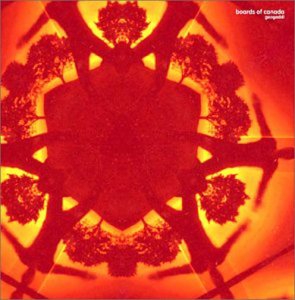
Both The Brood and Scanners have their eye-popping moments that will impress even the most jaded genre-fan – but it is not all about the visual. Just like Akira and A Clockwork Orange these movies have something to say about institutionalized society and its “Guinea Kids” and machine martyrs, young people whose bodily fluids are subjected to experiments with fatal results, all in the name of science, morality and society. This is part of that critical nerve that adds to Cronenberg’s rare quality of being both nice and nasty at the same time. Even as your body is falling apart, you think it would be fitting with some sweet, sweet Boards Of Canada on the soundtrack. These movies breathe with the love of the cinematic craft and its possibilities, and when I watch the extra material for The Fly I get the impression that David Cronenberg is a really nice, quiet guy, someone who seems calm and easy to work with. He often uses the same crew for his movies, and the greater part is shot in Canada. Regarding this he has said that “every country needs a system of government grants in order to have a national cinema in the face of Hollywood”.

“The battle for the mind of North America will be fought in the video arena: the Videodrome. The television screen is the retina of the mind’s eye. Therefore, the television screen is part of the physical structure of the brain. Therefore, whatever appears on the television screen emerges as raw experience for those who watch it. Therefore, television is reality, and reality is less than television”
(Videodrome, 1983)

In the year after Scanners, The Message and Planet Rock were recorded, leading out one long-lived global wave of protest, and another of resistance and community. It was also the year when Philip K. Dick died, and I was born. In the year after Videodrome was released.

Videodrome began really with the idea of a man watching a program that came to him on television, that was a very strange, extreme program which he became obsessed with and which he could not discover the source of (…) It is, I suppose, a comment about media, the human body and the concept of reality being something that is a concept of will rather than some absolute that’s given to us.”
(Cronenberg in The Cinema Of The Extreme)

It is the ultimate movie about the television screen, a mythological tale of media and its psychedelic powers. In its own way a postmodern movie, you feed Videodrome by watching it on your television, and you begin to think to yourself: “What is it I am watching? What is the true nature of the screen?” In this way Videodrome is an open masterpiece, Cronenberg at his best hallucinating-discussing the marriage between media, flesh and technology.

“The most accessible version of the ‘New Flesh’ in Videodrome would be that you can actually change what it means to be a human being in a physical way. (…) We’re free to develop different kinds of organs that would give pleasure, and that have nothing to do with sex. The distinction between male and female would diminish, and perhaps we would become less polarized and more integrated creatures. I’m not talking about transsexual operations. I’m talking about the possibility that human beings would be able to physically mutate at will, even if it took five years to complete that mutation.”

If it was clever to cast Arnold as the terminator, it is pure genius on Cronenberg’s part throwing new wave-singer, sex-icon Debbie Harry in here as self-help personality and closet sado-masochist Nicki Brand. Videodrome has the same classic feel to it as sci-fi masterpieces Terminator, Aliens and Robocop from the same era, and just like in those movies the settings, the special effects and visual concepts are just beautiful. But Videodrome feels like it is growing more and more contemporary with time. Its exploration of an eghties video-underground projected into the future is also a powerful cinematic statement about our present screen existence; that social sphere created by media-addicts, otaku-maniacs, fan-fiction, blog-criticism, youtube, bedroom-bores, porno-scum, file sharing networks, reality games and affordable, easily copied CDs and DVDs.
Jun 192007
 

(uppdaterad 070727)


Nu har jag sett filmen två gånger och kan hjärtligt rekommendera den. Det är utan vidare så att A Scanner Darkly kan vara för dagens drogkulturer och The War On Drugs vad A Clockwork Orange var för det institutionaliserade samhället.

Neo-Fred-Bob Arctor, denna kroppsliga manifestation av en framtid där vi gör ett bra jobb med att dunkelt övervaka och registrera oss själva (men dunkelt), är utan vidare Keanau Reeves bästa roll (bättre än vad han gjorde i River’s Edge). Att casta honom som sönderfallande death freak-snut är den största lyckträffen i drömfabriken sen Arnold i Terminator.

Filmen är lika mycket Dicks geni som Linklaters känsla för slacker-dialog och fina sentimentala scener.

I extramaterialet beskriver animations-teamet kompletteringen av A Scanner Darkly som en triumf. Precis så. Slutscenen kopplar inte enbart ihop alla linjer filosofiskt och berättandemässigt, man fylls av en känsla att animationskonsten tagit ett steg framåt, att resten av världen nu kan göra tecknad film på samma nivå som de japanska mästarna. Den fräscha sensationen ligger här inte bara i det Rotoscope-tekniska samlaget mellan filmkamera och ritplatta, utan beror också på att den svindlande landskapskänslan man får inte kommer från en anime-rulle, utan från en Richard Linklater-film med Keanu Reeves, Woody Harrelson, Robert Downey Jr. och Winona Ryder.

Det är en fin dag i filmvärlden.

Jun 192007
 

http://imdb.com/title/tt0091860/quotes

“Having lived in a similar feeling setting – a surburban wasteland full of stoned drones – I was very creeped out by the characters and how real they seemed. Unlike most movies, it was easy to imagine someone you know in the same role. It struck close to home at how apathetic and aimless these teenagers were. Watch American news for an hour and try to feel emotion for anything portrayed there and you’ll understand why the people in this story are so frustrated and restless with their situation. It’s saddens and disturbs me. “

Det här var Keanu Reeves enda goda skådespelarprestation i sin karriär tills huvudrollen i Richard Linklaters mästerverk A Scanner Darkly (antagligen den bästa filmen på senare år). Förutom Neo-Bob-Arctor rymmer River’s Edge både Dennis Hopper och Crispin Glover.

Jun 082007
 
The killing of America är fullspäckad med fantastisk dokumentation från ett ett desillusionerat amerikanskt 60-tal och det därefter följande dekadenta, nergångna 70-talet. Den här Mondo-liknande rullen börjar med avrättningar av JFK, Bobby K och MLK, attentatsförsök på Reagan och George Wallace, och går över i snabba bitar med sektledare som Jim Jones (häpnadsväckande klipp från farmen) och Charles Manson, seriemördare som Berkowitz, Gacy och Bundy, och förbluffande filmklipp kring mindre kända pistolmän och knäppskallar, vilket varvas med stämningsskapande scener från demonstrationsskjutningar, upplopp, och allmän punk-, porr-, och prostitutionsdekadens.

Här utandas en groovy, svartsynt tidskänsla som Runkbåset är svagt för. Se till att ladda ner, det är lite som att få andra numret av ANSWER Me! i en sliskig, sensationalistisk en-och-en-halvtimmes AVI-fil.

Hiphop-artisten, porrfilmsregissören och metal-gitarristen Ronnie Braunstein (även känd som Necro) är en samtida Mondo-konstnär. Hans öga för världen har samma direkta, råa, explotativa, ibland sadistiska kvalitéer som Mondo-traditionen äger. Human Consumption är det hittils bästa exemplet på vad jag menar med Necro som genialisk Mondo-rappare.

Bloodsucking Freaks är för Necro vad The Education Of Sonny Carson var för Ironman och Mothership Connection var för The Chronic. Den här explotativa, sadistiska skiten är väl det som han gåg igång på, samplingsvänligt lågbudgetvåld och sjaskiga New York-miljöer. Filmen samplas bl a på Evil Shit, This Is Not An Exercise, Frank Zito, och förut nämnda Human Consumption. Spana in videon till White Slavery om du vill räkna influenser.

Ill Bill är även han en mästare i nattsvart Americana, även han är ur Den Stora Smutsen. Edge Play från The Sexorcist är tråkiga live-beats och riktningslösa groteskerier från Necro och Mr Hyde, men Bills vers löper precis som ett brev till en porrtidning, och det är genialiskt. Andra juveler från den skivan heter Suckadelic, Out Tha Pocket och Who’s Your Daddy.

Men Bill är inte lika negativ som sin lillebror. När en journalist frågar honom när han var riktig förbannad senast, så vill han inte ge något svar, utan menar att man inte bör uppehålla sig vid sådant negativt tänkande, det håller dig bara från att växa ur din egen misär. Dylika tankar om personlig uppbygglighet och likgiltlighet bort från negativa levnadsmönster finner vi i filosofihistoriens mest kärnfulla och fruktbara avkrokar.

Ill Bill är en solskenshistoria, som gått från droger, våld och fattigdom i Brooklyns Glenwood Projects och flera misslyckade skivbolagskontrakt och en slitsam underground-tillvaro, till att arbeta med ikoner och legender som Raekwon, Killah Priest, Styles P, B-Real, DJ Muggs, House Of Pain, M.O.P, DJ Premier, Pete Rock, Large Professor, etc. – och detta med all sin intregitet och sin egenart intakt. Från en mörk Mondo-tillvaro har han lyckats våldta den amerikanska drömmen med ett vinnarens leende.

Jun 062007
 

“science fiction is a particularly appropriate vehicle for treating the complexities of the Japanese success story. The very vocabulary of the genre – that of technological, social, and cultural advancement – reflects the cultural instrumentalities that characterise modern capitalism. These instrumentalities include the rapidity of change, the ideology of progress toward some anticipated ‘future’, and the omnipresence of the machine.” (Susan Napier, 329)


Skräck-genren kretsar kring rädslan för det okända, och för främlingen (som är så mycket mer närvarande i det urbana landskapet än i den lilla byn och den förmoderna stammen). Science Fiction accepterar förändring, horror affirmerar status quo, man rensar det mänskliga samfundet från det främmandet och skrämmande, “horror represents an attempt on the part of the characters, obviously, but equally on the part of the audience, to obtain reassurance and a sense of security in a world made threatening by forces beyond individual control. In this sense, horror may be seen as a desperate act, a last hope for redemption and the reclamation of a lost sanctuary of stability. In effect, horror becomes a quest for stable identity, concrete and unquestioned.”

I dagens osäkra ekonomiska läge känner många japanska män av en förlust av deras identitet som varit så nära sammanbunden med en väldig ekonomisk expansionen under 70- och 80-talen, då Japan reste sig från Hiroshimas aska och ruiner och slog västvärlden på deras hemmaplan, och företaget man jobbade för var ens familj. Dessa män känner sig i dagens prekära samhälle inte längre “hemma med sig själva”.

“Indeed, the Japanese have been jolted, as it were, by their own success and are having a difficult time redefining their own position in relation to the rest of the world. From the perspective of the structure of the self and the other, therefore, this era is unprecedented for the Japanese, who feel for the first time in their history that they have ‘mastered’ the outside, the other, whose negative power devastated the country in 1945.” (Ohnuki-Tierney, pp. 199-200.)


Japaner spenderar till hög grad sin tid i bekväma virtuella fantasier, där identitet har blivit något utbytbart, något man köper och säljer. I denna samhälleligt giltliga identitetskris kan frånvaron av uppordnande, traditionella slut i japansk skräck-film göras förklarlig.

“This is a pessimistic vision, to be sure, for—unlike in classic works of horror there is no reassurance at the close of a re-establishment in the film of the existing social order. Rather, what presents itself through Japanese horror is the certainty of a dystopic vision, the confidence of a destruction of hope. Identity remains a challenged, threatened thing, a commodity unable to resist the forces of the marketplace.”

May 272007
 

“Sadness over a bird killed, but no sadness over a fish killed.
Lucky are those with voices.” (Suitou Ryokuu – Meiji Era)

En uppföljare måste dubbla insatsen, och slå på stort. För Gudfadern bröt man upp berättarkronologin och plockade in Robert De Niro, och för de första uppföljarna till Alien och Terminator dundrade James Cameron på med massor av action, specialeffekter, och enkelt stora scener. Man öste på, och lyckades skapa filmer som på vissa nivåer är bättre än föregångaren.

Likt i T2 finns det i Ghost In The Shell 2: Innocence scener som framkallar ett högteknologiskt “sense of wonder”. Den första filmens talangfullt dragna linjer och väl avvägda ytor samsas med uppgraderade ljuseffekter och allmänt 3d-bögeri (ibland lyckat, ibland mindre lyckat), som ökar på den underbart täta och djupa Blade Runner-atmosfären (blandningen av ny och gammal rekvisita, dock-byggandet och identitetsproblematiken är annat som GITS:2 har gemensamt med Ridley Scotts mästerverk).

Här är bakgrundsbruset de nödvändiga myterna om framtida maskinmartyrer, deras offrande av den mänskliga kroppens integritet och enhetlighet för nya kroppar, nya medvetanden, nya äktenskap, och nytt liv utan skuld. Bättre alltså att fanatiska privatpersoner utför detta kartläggningsarbete, än fanatiska företag och myndigheter. Manusförfattarna ökar på med blandad Konfuciansk visdom, europeisk mytologi och nutida japanska cyberpunk-linjer dragna till framtida extremer, och väger upp det med massor av saftig action och en fördjupad psykologisk gestaltning, främst kring Batous karaktär. Men det lämnas en del lösa trådar i historievävandet, och linjer som borde knutits ihop lämnas outforskade, vilket löper mot GITS-universumets inre logik. Det slappa skrivandet här konstraterar skarpt mot första filmens mästerliga handlag och Stand Alone Complex-seriens disciplinerade pusslande.

Trots invändningar äger GITS:2 ett starkt genomföljande av sina grundidéer. Det är en häpnadsväckande animerad långfilm om den problematik som vi kommer att möta när vi träder in i en ny oskuldens tid.

Jan 072007
 

“May the light of God shine upon us, illuminating our souls wiht love.”

“Nobody is innocent. Man’s hope is lost a long time ago. Pain appears and screams from every corner. The humanists pity themselves from the rail of the pulpit. But, may them pity themselves of their own souls, because it is exactly the pride of goodness that resides in almost every sin. Man dies, the world burns out and the flames are consumed, but excess accompanies the vacuum.”

(från filmen Amarelo manga)

Dec 212006
 

Kanske var äventyret som sommardag det finaste som 60-talets ljusa, konstruktiva sida, dess apollonism gav oss?

Dagen som något att ta vara på, en solekonomisk, upprät hållning (Ekelund – “Vill du hålla dig upprätt – : fall, på knä), en gränsöverskridande nyfikenhet och vördnad inför den jordiska vävnaden, nedärvd genom underjordiska ambassadörer som Herman Hesse, Alan Watts, Henry Miller och Timothy Leary (som på sitt sätt var kopplingsstationen mellan Wien, Dublin och nätverksöverskridandet).

LSD-trippen som naturupptäcktsfärd, marijuana politics, kommunalt boende, gemensamt skapande, och den grynande hemdatorrörelsens teknikbejakande är sådant som spritt för vinden lever vidare i populärkulturen – och som brändes ut alltför snabbt på 60-talet, för att det saknades breda, underjordiska rötter till kulturarvet (här får vi ge props till Burroughs för att han kunde ge Kerouac Céline att läsa, om det var till nån nytta är en annan fråga) och till arbetarrörelsernas försök.

(Ännu en dag närmare framtidens ultravioletta gryningar, säger programmeraren efter ett dagsverk i maskinparken, och ett gott dagsverk även för Burroughs i textverkstaden.)

På andra sidan tidsandan satt John Waters och andra entarte filmkünstnären, spyfulla av allt kärleksprat, och drömde om sin Hate Generation.

På 70-talet fick de sin chans.

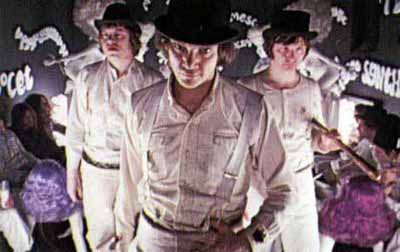
När den sadistiske ynglingen med keps och hängslen brakar in i de ombonade medelklasshemmen för att plundra och våldta (A Clockwork Orange, I Spit On Your Grave – författarhem i båda filmerna!) visar han att 60-talets drömmar om samhällelig fred och en fredens kultur är över. Tidsandan tog inte slut, men ruttnade in i 70-talet. De kulturella frihetssträvandena gjorde rum åt mycket nytt, och inte bara människans mest finstämda föresatser.

En film som Last House Of The Left är en tattarcirkus av sadism och ändamålslösa övergrepp. Inget finlir, men det är nåt med tidsandan och filmskaparens vilja att chocka i den här sortens rullar. Här tillåts man visa upp hela samhällssegment som genomsyrade av sadism och extrem asocialitet – tvärtemot vad du trodde, men käckt ändå. En så cheesy, tacky, snuskig och svartsynt rulle som Bloodsucking Freaks är samtidigt riktigt skojig.

(Inte konstigt att den har genererat ett kultfölje. När jag hyr den på Marilyn Video spelade de också helt magiskt och psykedeliskt Necros Poetry In The Streets i högtalarsystemet).

När våra demoner och djävular inte längre kunde gestaltas av monster och utomjordingar, så kom skräcken mer och mer att tecknas som urban kriminalitet (Taxi Driver, Death Wish) och degenererat landsortslödder (Texas Chainsaw Massacre, I Spit On Your Grave).

Det är något att se plump sadism på film, man vill gärna se människan som piss värd. Därifrån nånstans kan man gå vidare.

Dec 212006
 

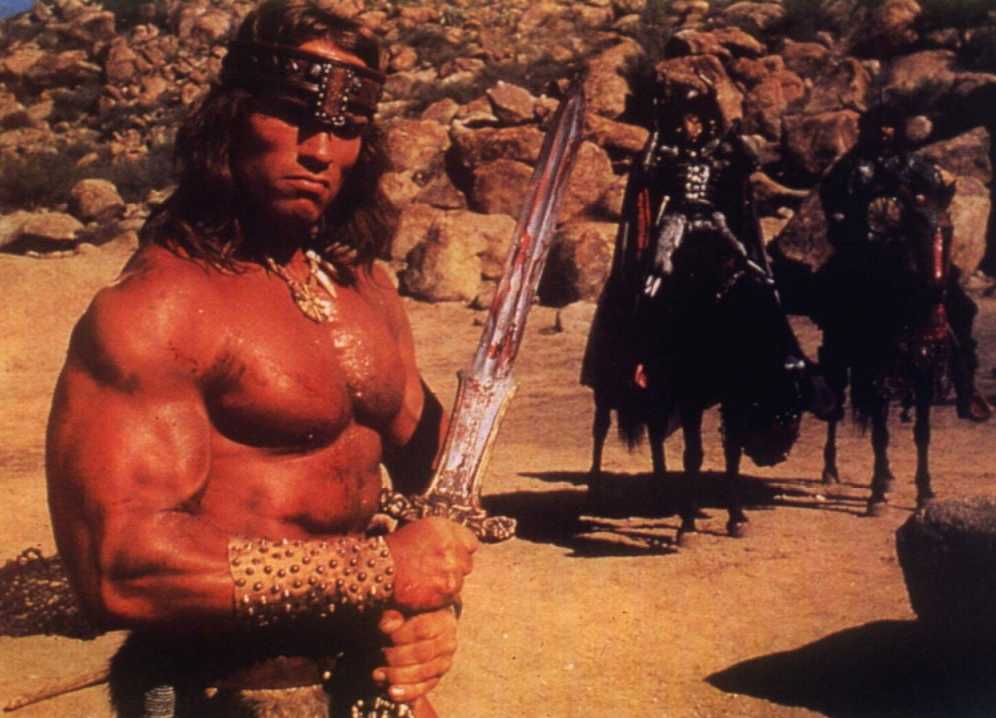
När Arnold Schwarzneger i Conan Barbaren sätter av för att störta Thulsa Doom och hans hjärntvättade följe vet han från sitt egna liv vad som väntar honom. Schwarzneger var under 60- och 70-talen i svängen med de nya drogerna och den fria kärleken, han läser Crowley och hänger i samma kretsar som Cary Grant och Sam Davis några år tidigare, och upplever domedagssekterna och folkvandringarna på nära håll.

När han flera år senare gestaltar Conan känner han igen avgudadyrkan och den blanka tron, där en dotter kan stöta giftormens dolk i sin egen far. Det är en tro sprungen ur bildningsbrist och traditionsbrott.

Switch to our mobile site