Feb 102009
 

DMX Krew and Cylob live sets… that’s a very good thing.

Of course, it’s all about supreme taste in electronic funk and acid. They know which classics you prefer better than yourself, plus they give you the news, in a tight, hot package.

Check here first. Then check this out.

Now it’s time for Ceephax Acid Crew live sets (click here and go to bottom of page). Be sure to stop by his homepage which has won many prestigious design awards.

Feb 052009
 

George A. Romero’s transplantation of the vampire myth into the grey urban seventies is the definite modern take on the genre, an update done discreetly and gently, with great eye for detail and a strong artistic vision. Lost Boys and Anne Rice aint got shit on this low budget masterpiece right here.

That our vampire in this one is an awkward, and seemingly a bit “slow”, red-headed teenage loner makes the story both pleasantly absurd and moving. Apart from the plot – which effortlessly sidesteps all the easy stereotypes, never letting you know where the movie is heading – the delicate camera and the groovy, tripped out soundtrack gives you a wonderful feel for the time and the bleak Pensylvanian neighbourhood where it was filmed, capturing both the broken beauty, the tideousness and the sleazy moralism of backwards urban life in the seventies.

Watching this just now got me thinking where I could get my hands on more of the sort, which is tricky. Martin is truly one of a kind. As far as my knowledge goes, Romero did not make any more films in this vein, and who else would be capable?

No fucking body.

Feb 042009
 

Sensationalism has its place. ANSWER Me! and the infamous Mondo film-series are examples when artists concentrate on the gory and extreme parts of reality without turning away, and do it with artistic rigour. That redeems them.

It is harder to forgive the sensationalism of a film like Send A Bullet, not only because the themes are randomly thrown together and distorted through a clueless North American, upper class-perspective, but firstly because the director literary gorges himself on all the sleaze and gore of Brazilian reality while at the same time making a grand display of holding his nose. Kind of a double standard going on here. “Oh, this is terrible! But let’s loop the industrial slaughter of frogs and kidnappers cutting off ears again since we were to lazy to film any relevant material.” Also, it resembles the Mondo-series not only in its random structure and obsession with violence and misery, but in that it does not mind staging scenes when reality just isn’t juicy enough. The kids playing kidnappers in the end? He instructed them to do that.

In Send A Bullet (a pointless film needs an equally pointless title) North Americans living in São Paulo complain that they have to ride around in the city in bulletproof cars and helicopters for fear of being robbed and kidnapped. Especially funny is the part where the interviewee mentions that his robber stopped by the sidewalk after taking his money and counting it, as if he were without fear of the law. Why not move back to your own country then, one asks oneself, preferably to Washington D.C., where the murder rate doubles that of São Paulo’s and the criminals surely are polite and professional?

Why not watch amazing documentaries about Brazil such as Ônibus 174 or Beyond Citizen Kane (torrent) (google video) instead?

“Please”, whispers director Jason Kohn, “‘Send A Bullet’ into my head before I make more lame ass documentaries!”

Nov 262008
 

Det finns en nackdel med J.G. Ballards “komprimerade romaner” – de fungerar oftast inte. Historieskelettet saknar kött, bendammet bärs bort av vinden. Läsningen lämnar sällan något kvar.

De stycken i Skändlighetsutställningen som trots allt träffar målet är de som främst drivs av idé- och formmässig konceptualitet, som Varför jag vill knulla Ronald Reagan och den briljanta Jarry-parafrasen Mordet på John Fitzgerald Kennedy sett som en biltävling i nedförsbacke. Symptomatisk nog är också Ballards kommentarer ibland mer intressanta än novellerna.

Anledningen till att Cronenbergs filmatisering av Crash (vars fragmentariska embryo återfinns i Skändlighetsutställningen) är så sömnig är att han gör sig mycket bättre med egna manus än adaptioner, snarare än att det här inte är potentiellt högexplosiv filmmytologi. Tillsammans med Burroughs tillhör Ballard de väldigt få som kan få ihop hypermodern prosa på ett anständigt sätt.

Oct 172008


“
I saw Matt Dillon in black and white there ain’t no colour in memories“

Rumble Fish is a story about alienated youth, told as straight and emotionally as possibly. The subjects of this kingdom are turned back and forth, the world runs through them. They scratch and claw against what they have been placed in, stretching the limiting situations that society and family has put them in.


“He’s merely miscast in a play. He was born in the wrong era, on the wrong side of the river… With the ability to be able to do anything that he wants to do and… finding nothing that he wants to do. I mean nothing.“

Luckily, Rumble Fish is not realistic. The gang violence is choreographed, like in A Clockwork Orange. For every single scene, Coppola has sought far and wide for that one camera angle and light-setup that drenches the dialogue with as much as fatal, foreboding meaning as is possible. The focus is often from the side or from below, or from far above. Smoke is always seeping out from the sewers and coming out from the brick walls, swimming over the asfalt, turning to thick fog in the back alleys. Firesteps, bars, filthy apartments are framed by damp lights, dust, shadows where darkness, the unknown, the undefined is eagerly waiting to take the upper hand.

“California’s like a beautiful, wild… beautiful, wild girl on heroin… who’s high as a kite, thinkin’ she’s on top of the world, not knowing she’s dying even if you show her the marks.”

The soundtrack has a distinct eighties feel, while at the same time referring nostalgically to the fifties and exotic American places like New Orleans. Where does the movie take place? Fastforwarded images of the sun reflecting in the big city skyline have been edited into between scenes, while the kids drift aimlessly on deserted smalltown streets. All the production team’s technlogical know-how – sound editing, camera control, lightning, musical composition, actor instruction – has been employed to give us the feeling of timelessness and mythological accessibility. The exact geographical location is actually Tulsa, Oklohama, that is a mythological nowhere, teenage wasteland, kingdom of dead-end youth.

With The Outsiders and Rumble Fish, teenage author S.E Hinton created some of the most memorable characters of modern popular culture. She also wrote the script for Rumble Fish in less than two weeks “on one of the first personal computers“.

“If you gonna lead people, you have to have somewhere to go“

“They are strangely indifferent, and for this very reason are in the right frame of mind. They have stopped being demanding and narcissistic, but they know perfectly well that nothing today corresponds to their subjectivity, to their potential of energy. They even know that all current reforms are rather directed against them. They are determined to mind to their own business as much as they can. They hold it open, hang on to something possible.“

(Deleuze och Guattari, ’68 Did Not Take Place)

Oct 072008
 

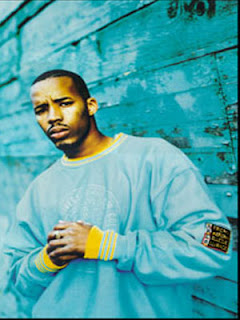
Warren G introduces his second CD, Take A Look Over Your Shoulder, in traditional Clintonian fashion, taking over the controls of the Mothership and announcing the familiar destination of Chocolate City… loosen your seat belts and keep your flashlights at hand and your ears to the stereo, we’re in for a funky landing.

This is beyond P-Funk, though…

It would take over a decade… from the decline of the George Clinton dynasty’s mighty reign, with Computer Games as the very fitting finishing piece (passing the torch to electro warriors Afrika Bambaataa, through Planet Rock, and Egyptian Lover, through Uncle Jam’s Army)… throughout the eighties, when Prince and Rick James did a good job at administrating the kingdom stipulated by Brown, Sly and Clinton, but without anything ever coming out of their studios that was revolutionary enough to demand another letter before the Funk… we would have to wait all the way until 1992, when Dre dropped The Chronic… until 1993, when Snoop Doggy Dogg introduced us to the G-Funk era… and until 1994, the year that saw the release of Regulate…G Funk Era, and with that record, the instant success of a young artist representing G-Funk in its purest form.

The public consensus that The Chronic and Doggystyle are the only good records coming out of the mighty G-Funk movement needs revision. Regulate…G Funk Era was way bigger than the monster hit that overshadowed it. We get polished arrangements, thick, rubbery bass lines, and hard but laidback, understated raps throughout the album (and a guest spot by Lil Malik, Snoop’s little cousin (which I guess would make it Warren G’s cousin too, perhaps brother… these rappers all seem to be related in one way or other) known from Pump Pump) – just like the second album, Take A Look Over Your Shoulder (even though it is a small thing calling the debut superior).

Dr Dre is usually viewed as G-funk’s chief architect, with The Chronic as the city hall, but the work laid down by Warren G ought not to be disregarded. He purified the style, and gave us some of its most memorable moments, with I Want It All probably being the smoothest shit ever.

Just like the single Regulate overshadowed the album, Nate Dogg’s solo output has been overshadowed by how hard his freelance hooks have been hitting. His talent is meant for more, as evident by classic solo cuts such as Me & My Homies, Concrete Streets, I Got Love, and I Pledge Allegiance.

Having suffered two strokes, he is now in critical condition, unable to breath by himself. Let us pray for his recovery, and a soon return to music, recording more classic material for us to play in the car.

Sep 232008
 

These are words that we have been waiting for:

“‘Please, a definition: A hibernation is a covert preparation for more overt action‘

Okay. Expect a full relaunch within a week or two.”

Hopefully Cocaine Blunts will continue to be the weblog where the love of music shine bright amidst this journalistic kulturskymning, and more than a little attention is put to research and technique.

Sep 102008
 

Arne Reberg – Ivar Lo – de utsattas reporter

Proletärförfattarna går inte att avfärda. Att utesluta dem ur den svenska litteraturhistorien skulle skrika högt och se dåligt ut. Det skulle likna historieförfalskning. I ett isolerings- och tandutdragningsförsök kan man dock klumpa ihop dem och stämpla dem som träiga, tröga och tråkiga.

Vallar man boskap, gallrar rovor, och odlar en hemlig kärlek till skrivandet i en anti-intellektuell uppväxtmiljö, söker ens första böcker troligen gestalta detta sammanhang. Det är nödvändigt och fullkomligt grundläggande. Vill man komma någonvart så måste man skriva sig igenom och bortom sin hittintills förda existens, med all frustration, ångest och trams som ryms däri. Därför skriver vi nödvändigtvis kring acid house, astma, folköl, och bemanningsföretag, och därför fyllde Ivar Lo-Johansson mer än en bok med betraktelser om att knulla får och slita på åkern som ett djävla djur.

Vad som inte står i skolans läroböcker, men som Arne Reberg understryker i Ivar Lo – de utsattas reporter, är att Lo-Johansson kontinuerligt sökte nya fält att låta pennan verka i. 1927 debuterade han med Vagabondliv i Frankrike (som likt den senare Nederstigen i dödsriket med fördel läses som syskonskapelser till George Orwells Nere för räkning i Paris och London. Likt Orwell försökte Lo-Johansson sig också på SF i och med 1967 års Elektra. Kvinna år 2070).

Även om han är mest känd som romanförfattare tar journalistiken upp mycket plats i hans litterära arv, och han tar upp mycket plats i den svenska journalistiken. Ivar Lo-Johansson uppfann det undersökande reportaget i vårt land. Efter att en lång rad av hans romaner och artiklar spelat en avgörande roll i avskaffandet av statarsystemet, ägnades en likvärdig ansträngning åt att förbättra åldervården (efter hans artikelserier eliminerade man de värsta missförhållandena och införde hemtjänst). Pionjärarbete bedrevs också i debatterna kring sport, prostitution och integrationsfrågor – med 1929 års Zigenarväg, och ungdomens sexuella kamp fick luftunderstöd när Lo-Johansson i artiklar försvarade tonårsflickors rätt att ta sexuella initiativ (vilket idag betraktas som en självklarhet, men på hans tid sågs som något mycket kontroversiellt).

Långt senare, med många romaner och novell- och artikelsamlingar bakom sig, skrev han vredgade artiklar om USAs bombningar i Vietnam, som alla refuserades, och han förbittrades över att stå utan en tidning att skriva i. Långt mer än The Internets har säkerligen den rättänkande publicistiska likriktningen bidragit till att sänka ner dagspressen i sin dödskamp.

Aug 122008
 
Christian Bloch – Young American LP

(Den här underbara dub techno-fullängdaren fanns förut att ladda ner gratis från Thinner; numera verkar den dock vara borttagen, men kan bytas ut mot det mesta som finns att hämta där.)

–

När man lyssnar på så här vacker musik är det inte längre aktuellt med självmord, tröga depressioner och svartklätt svårmod. I denna nya elektroniska musik har överlevandet möjliggjorts – mer än överlevnad, dock, snarare är det en poetisk, meditativ tillvaro vi välkomnas till, ett vänskapsförhållande mellan den elektroniske musikartisten (artist här som glamourglans och genikult – eller endast som ett taget namn, en anonym inskrift, en nod bland andra i ett oöverskådligt nätverk av nätverk) och omgivningen; vidsträckta lägenhetslängor, stadsparker, sovrum, buss- och tunnelbanesystem, maskinparker, havskanterna, träd, trottoarer, trafikljus, vardagsrum, allt detta som görs tillgängligt för artisten när maskinerna lärts känna lite bättre. De ger honom, vad han vill nå: musikskapande som upptäktsresande i jungfrulig inre mark, i vänners sällskap.

Vänskapsförhållandet återkommer i de stora upptäkterna i modern musik; det intima umgänget Hendrix förde med effektpedal och elektrisk gitarr; Lee Perry med rullbandspelare och mixerbord; Kraftwerks analogsynthar och trummaskiner; Aphex Twins preparerade pianon, egenskrivna datorprogram, sammanlödda hemelektronik. Jag-upplösningen och medvetandedelningen pågår ständigt. Befinner sig det skapande subjektet i männsikan, i maskinen, i båda och, eller någonstans mitt-i-mellan? Spelar artisterna sina instrument, eller styr ljudverktygen i lika grad över köttet? När människans herravälde över maskinerna rubbas till förmån för en mer jämlik relation uppstår vid tillfällen ljuv, visionär musik.

Switch to our mobile site